
A school’s anti-bullying policy can promise protection. A civil lawsuit still has to establish a legal basis for recovery and plead facts connecting the defendant’s conduct to the injury. The September 30, 2026 decision in Bronstein examines that distinction in a deeply painful case involving the death of 15-year-old Nathan Bronstein.
For Illinois families and lawyers evaluating school bullying litigation, the opinion matters in three ways: it addresses whether the bullying prevention statute creates its own damages claim, explains why specific causation allegations matter, and separates the claims dismissed on appeal from those that remained in the case.
- Case
- Bronstein v. Latin School of Chicago
- Citation
- 2026 IL App (1st) 242271 · Docket No. 1-24-2271
- Court and date
- Illinois Appellate Court, First District, Third Division · September 30, 2026
- Opinion
- Justice Lampkin; Presiding Justice Quish and Justice Rochford concurred.
- Result
- Selected dismissals and denial of further amendments affirmed.
What happened in Bronstein v. Latin School of Chicago?
According to the allegations summarized in the opinion, Nathan transferred to Latin School for his tenth-grade year in fall 2021. He struggled with the transition and social isolation. His family sought support from school staff and outside mental health professionals. The complaint later described bullying in a basketball team group chat and on social media, reports to school staff, and failures to investigate adequately or notify his parents. Nathan left Latin School in December and died by suicide on January 13, 2022, before he was due to resume classes at his previous school. Bronstein, ¶¶ 9–22.
His parents filed suit against the school and other defendants. The operative third amended complaint contained ten counts, including wrongful death, a statutory bullying claim, voluntary undertaking, emotional distress, fiduciary duty, consumer fraud, counselor negligence, and medical malpractice. The circuit court dismissed several counts with prejudice while allowing others to remain. Bronstein, ¶¶ 23–24.
Why could the appeal proceed while other claims remained?
The trial court entered an Illinois Supreme Court Rule 304(a) finding allowing an appeal of the resolved claims without waiting for the entire case to end. Robert Bronstein, acting as administrator of Nathan’s estate, appealed selected dismissals against Latin School and the refusal to permit further amendments. The appellate court reviewed those issues; it did not conduct a trial or resolve every claim against every defendant. Bronstein, ¶¶ 26–29.
Does Illinois’s bullying prevention law create a private right of action?
The court held that the statutory version it analyzed did not contain an implied private right of action. A “private right of action” means an individual’s right to sue under a statute itself. The estate’s Count II sought that remedy for alleged failures to investigate bullying and notify parents. The court described the issue as one of first impression. Bronstein, ¶¶ 31, 50–52.
Illinois courts consider whether the plaintiff belongs to the protected class, whether the injury is one the statute was designed to prevent, whether a private lawsuit fits the statute’s purpose, and whether that remedy is necessary to make the statute effective. Nathan belonged to the protected class. The court assumed without deciding that his death was among the injuries the law sought to prevent, but found the remaining requirements unmet. Bronstein, ¶¶ 32, 44–45.
The opinion treated the law as a regulatory framework for school policies, reporting, State Board of Education oversight, and anti-bullying grants. It distinguished those requirements from a statute that provides compensation for individual injuries. The statute also preserves remedies available under other civil or criminal law. That preservation mattered to the court’s conclusion that it should not imply a separate statutory lawsuit. Bronstein, ¶¶ 47–52.
The statute’s current citation is 105 ILCS 5/22-110
The opinion analyzed former section 27-23.7 of the School Code, using the version discussed by the parties when the operative complaint was filed. Footnote 4 explains that the provision was renumbered to section 22-110 in August 2025 and amended again in July 2026. Readers researching today’s requirements should consult the current Illinois bullying prevention provision, 105 ILCS 5/22-110, alongside the version analyzed in the opinion. Bronstein, ¶ 35 & n.4.
What about a negligence claim based on the statute?
The estate also sought permission to plead a common-law negligence theory based on statutory requirements. The appellate court affirmed the denial because the record did not contain a proposed amended complaint or an adequate account of what it would allege. Without that record, the court could not evaluate whether the amendment would cure the defects. This was a ruling about the request to amend, rather than a categorical holding that such negligence theories can never be brought. Bronstein, ¶¶ 54–59.
Can a school handbook create a voluntary undertaking?
A voluntary undertaking can create a duty when someone takes on services needed to protect another person. The duty is limited to the undertaking’s scope, and the doctrine is narrowly construed. Latin School did not dispute that an institutional undertaking could, in theory, support a direct claim against the school; the issue was whether this complaint adequately alleged one. Bronstein, ¶¶ 63–66.
The handbook policies alleged here were insufficient to establish the school’s direct undertaking. The court distinguished the institution’s publication of policies from the particular actions allegedly taken by staff members. It also found a separate problem: the direct institutional claim lacked factual allegations showing how the undertaking and its alleged mishandling caused harm, increased risk, or left Nathan worse off. Bronstein, ¶¶ 67–70.
Why was the fiduciary-duty claim also dismissed?
Count V relied on the same alleged failures to investigate, report, and remedy bullying, and claimed the same injuries as Count III. The court held those counts were duplicative. It expressly declined to decide whether a student or estate could otherwise plead a fiduciary-duty claim against a school. The decision therefore should not be read as establishing that schools can never owe fiduciary duties. Bronstein, ¶¶ 80–81.
Why were the wrongful death and emotional distress claims dismissed?
Wrongful death: the court found insufficient allegations of legal cause
Illinois’s general rule treats a voluntary suicide as an intervening act that breaks the causal chain from earlier tortious conduct. The rule is not absolute. A plaintiff must plead facts showing that the death was foreseeable as a likely result of the defendant’s conduct. The opinion applied the Illinois Supreme Court’s decision in Turcios v. DeBruler Co., 2015 IL 117962. Bronstein, ¶¶ 84–89.
The court found the allegations did not bridge that causal gap. Its discussion considered the timing after Nathan’s withdrawal, earlier mental health struggles, his reported denial of suicidal ideation, and the allegation that staff withheld bullying information at his request. Those circumstances were part of the court’s assessment of the pleading. They were not a trial determination of why Nathan died, or a general authorization for schools to withhold bullying reports from parents. Bronstein, ¶¶ 91–93.
Because causation resolved the wrongful death claim, the appellate court did not reach further arguments about Latin School’s duty or immunity. Its holding concerned the sufficiency of these allegations. Bronstein, ¶ 94.
Emotional distress: conclusions did not supply the missing factual connection
The intentional infliction of emotional distress claim failed for a related reason. Illinois requires fact pleading: a complaint must allege facts supporting each element, rather than repeat the elements as conclusions. The appellate court found insufficient factual allegations connecting Latin School’s actions or omissions to Nathan’s severe emotional distress. It affirmed on causation without deciding the remaining disputes over intent or whether the alleged conduct was extreme and outrageous. Bronstein, ¶¶ 100–104.
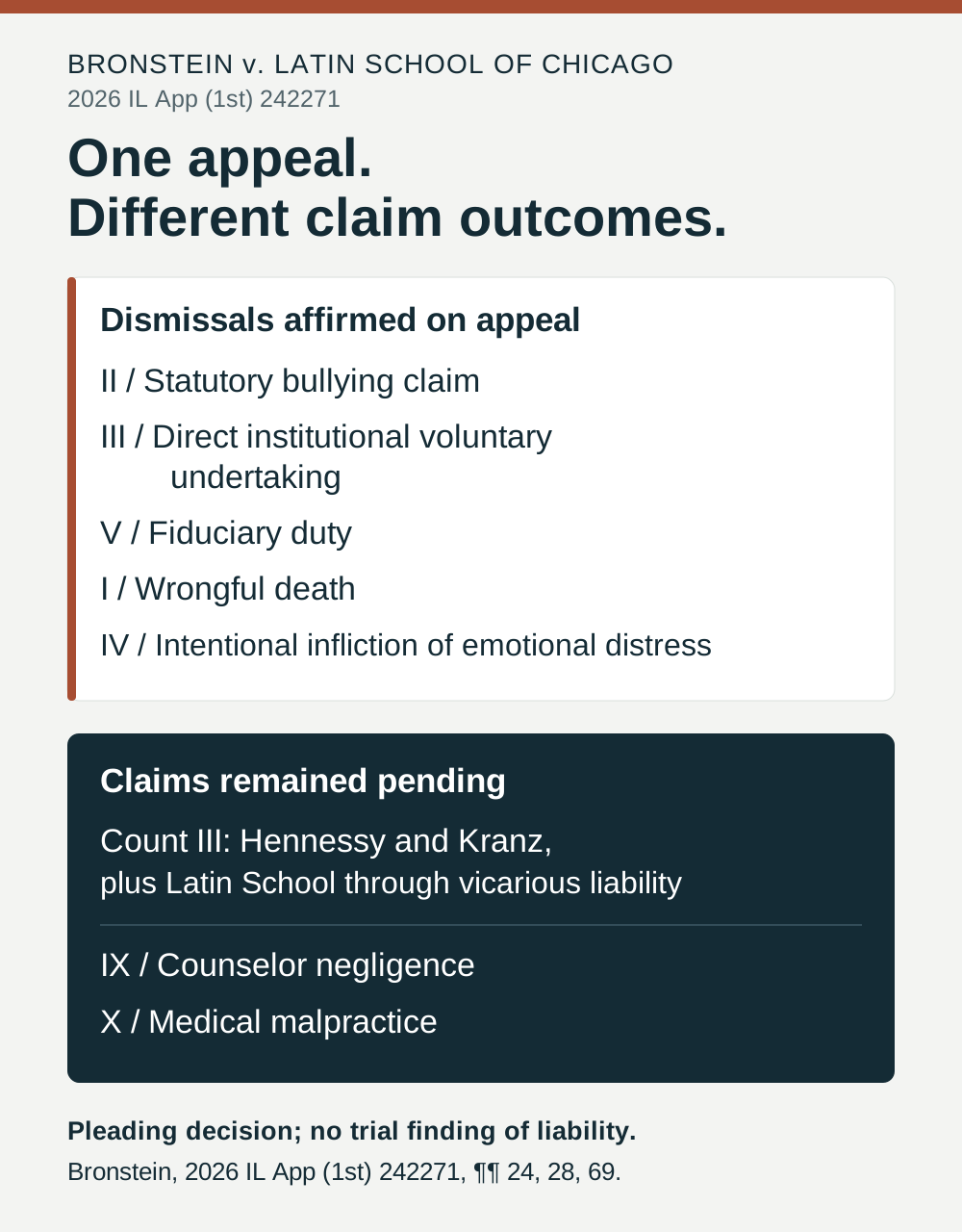
Which claims remained pending after the dismissal ruling?
The opinion reports that several claims survived the trial court’s ruling. Their survival means they were still pending; it does not establish liability or predict their outcome.
- Count III: the voluntary undertaking claim remained against Bridget Hennessy and Anneliese Kranz, and against Latin School through vicarious liability.
- Count IX: counselor negligence remained intact.
- Count X: medical malpractice remained intact.
Direct liability concerns the school’s own alleged undertaking. Vicarious liability concerns responsibility for staff members’ alleged conduct. That distinction explains how Count III could be dismissed against the school on one theory while remaining on another. The appellate court expressly offered no opinion on the sufficiency of the surviving Count III claims because no cross-appeal placed them before it. Bronstein, ¶¶ 24, 62, 69.
What Bronstein means for Illinois school bullying litigation
My reading of the decision: a careful case assessment should identify the available cause of action, the conduct attributable to each defendant, the particular undertaking or duty asserted, and the factual connection to each claimed injury. A policy, a distressing event, and a serious injury do not by themselves fill every required element.
For families and lawyers reviewing a school bullying matter, that makes several categories of records useful:
- The reports: what was reported, to whom, and when, including messages and contemporaneous notes.
- The response: what staff actually undertook, what they communicated, and what investigation or follow-up occurred.
- The applicable policies: the handbook and statutory provisions in effect during the events.
- The evidence of harm and causation: records and statements that may connect particular conduct with a particular injury.
- The procedural record: which claims remain, which theories were dismissed, and what a proposed amendment would actually allege.
The court also affirmed refusal to permit further repleading after four versions of the complaint. Its analysis is a reminder that requesting another amendment should be supported by a concrete proposed pleading that addresses the identified defects. More pages do not substitute for the missing facts. Bronstein, ¶¶ 106–113.
Frequently asked questions about Bronstein v. Latin School
What did the court decide in Bronstein v. Latin School of Chicago?
The Illinois Appellate Court affirmed selected dismissals against Latin School and the denial of further amendments. It rejected an implied private right of action under the bullying statute and found defects in several tort claims. Other claims remained pending; the entire lawsuit was not dismissed.
Can parents sue a school for bullying in Illinois?
Bronstein does not bar every school bullying lawsuit. It holds that the statutory version analyzed did not create an implied private right of action, while recognizing that other legal remedies may be available. Whether a claim can proceed depends on its legal basis and supporting facts.
Which claims remained pending in the Bronstein case?
The opinion reports that Count III remained against Hennessy and Kranz and against Latin School through vicarious liability. Count IX for counselor negligence and Count X for medical malpractice also remained intact after the trial court’s ruling. Their survival did not establish liability.
Did the court rule that suicide is always unforeseeable?
No. Illinois’s general rule treats voluntary suicide as an intervening act, but the rule is not absolute. The court held that this complaint did not plead facts showing Nathan’s death was a likely result of Latin School’s alleged conduct.
Did the decision permit schools to hide bullying reports from parents?
No. The court discussed Nathan’s reported request for confidentiality as part of its causation analysis. It did not establish a general right to withhold bullying reports or decide all questions about the school’s duties or immunity.
What is the current citation for Illinois’s bullying prevention statute?
The provision is now 105 ILCS 5/22-110, formerly 105 ILCS 5/27-23.7. The opinion explains that it analyzed the statutory version discussed by the parties when the operative complaint was filed, rather than every subsequent amendment.
Why did the appellate court affirm dismissal of the emotional distress claim?
The court found insufficient factual allegations connecting Latin School’s actions or omissions to Nathan’s severe emotional distress. It affirmed on causation and did not decide the remaining disputes over intent or whether the conduct was extreme and outrageous.
Primary sources and opinion status
- Bronstein v. Latin School of Chicago, 2026 IL App (1st) 242271 — official opinion.
- Illinois School Code, 105 ILCS 5/22-110 — current bullying prevention provision.
- Illinois Courts opinion index and explanation of slip, released, and final opinions.
Analysis prepared October 2, 2026. Illinois Courts listed this September 30 decision as a slip opinion when checked. Slip opinions may be modified; consult the official source for subsequent changes. This article explains the opinion and offers general information, rather than advice about an individual case.