ICE AND SNOW FALLS · SPRINGFIELD, ILLINOIS
Springfield, Illinois Ice and Snow Fall Attorney
After a winter fall, the surface may melt before anyone understands what happened. Jonathan T. Nessler evaluates Illinois ice and snow injury claims through The Law Offices of Frederick W. Nessler & Associates, Ltd., in Springfield. These cases require close attention to the source of the accumulation, the property’s use and condition, and the work performed before the fall.
Free consultation through the law firm · (217) 698-0202
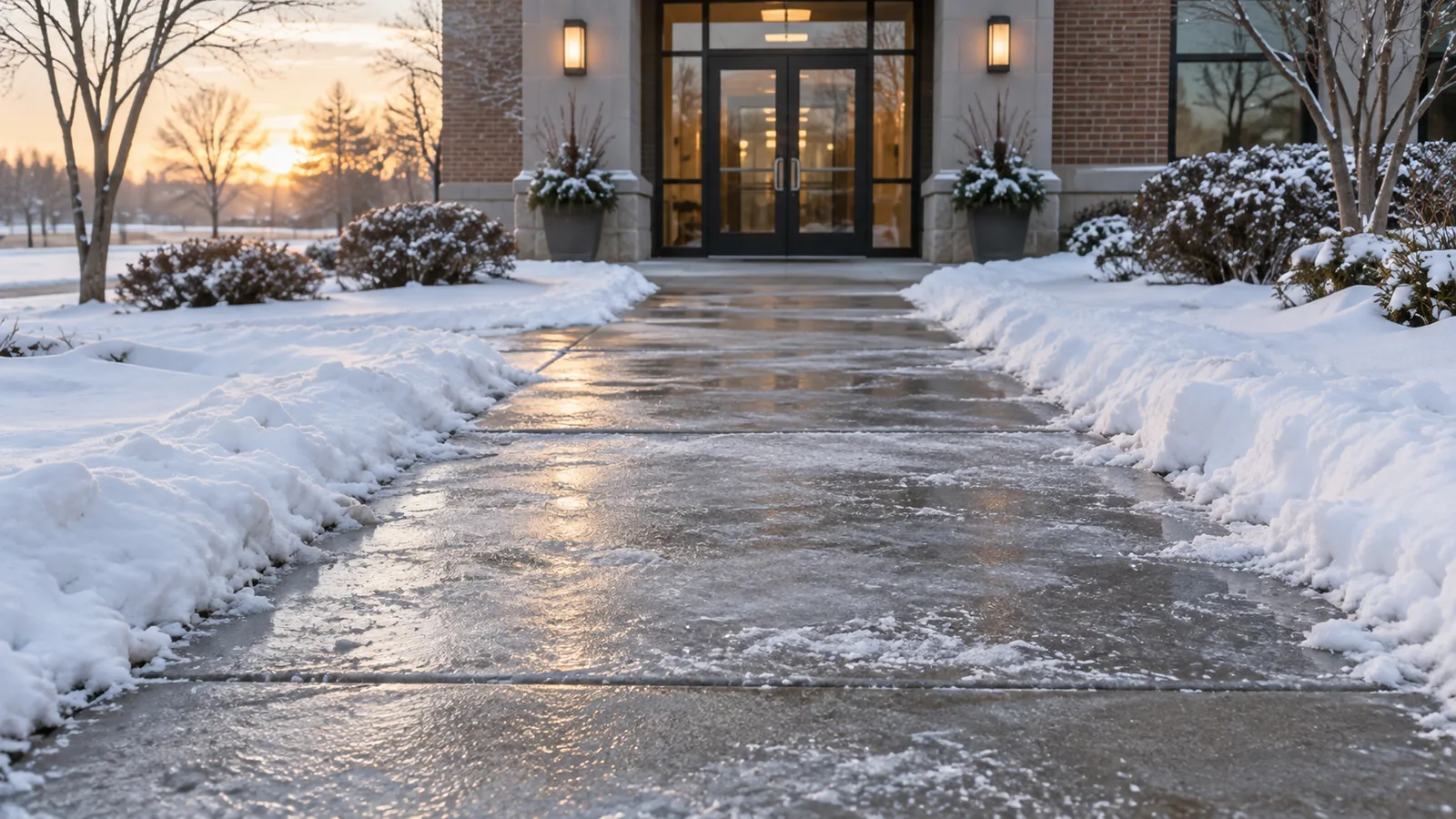
Illinois distinguishes natural from unnatural accumulations.
Illinois common law generally does not require property owners to remove natural accumulations of ice or snow. Ordinary freezing and thawing, moisture tracked in from snow, and normal traffic over snow can fall within that rule. The Illinois snow-and-ice jury instructions explain why the actual source matters. A slippery surface, even one that is hard to see, does not by itself establish a claim.
An unnatural accumulation can involve altered drainage, a building defect, or negligent work that creates the condition. Investigation may ask whether a downspout directed water onto the walking route, whether water collected because of a defective surface, or where plowed snow drained. These are possible explanations to investigate, not conclusions that every frozen puddle or snow pile creates liability.
Describe what you personally observed before and after the fall. Separate that from what a neighbor or employee later reported. Photographs of a nearby gutter or snow pile are useful, but the evidence must connect the condition to the ice where the fall occurred.
Snow removal and property maintenance raise different issues.
Voluntarily clearing snow does not make a property owner the guarantor of a perfectly dry walkway. Negligent removal that creates an unnatural accumulation can raise liability questions, subject to applicable immunity. A removal contract or lease may also affect the duty analysis; its terms and the people it protects need review.
The Snow and Ice Removal Act, 745 ILCS 75/2, provides protection for covered people removing or attempting to remove snow or ice from sidewalks abutting residential property, unless the misconduct was willful or wanton. This is a specific residential-removal protection, not blanket immunity for every landowner or every winter fall.
In Murphy-Hylton v. Lieberman Management Services, Inc., the Illinois Supreme Court held that the Act covers negligent snow-removal efforts but does not immunize otherwise negligent property maintenance causing an icy sidewalk. The distinction matters when defective drainage or construction is alleged. The decision does not establish that a particular defect caused your fall or that the defendant is liable.
Preserve the winter conditions before they change.
Seek appropriate care first. If photographs can be taken safely, capture the exact patch, the full approach, nearby drains and downspouts, slopes, piled snow, and any salt or grit. Preserve original images with their dates. A photograph taken after a thaw or new snowfall may show a different scene; note when each image was made.
Record the time, address, entrance used, weather you observed, and whether anyone saw the fall. Tell the office about cameras, earlier complaints, and anyone who reported repeated freezing in that location. Do not guess how long ice existed if you do not know.
The investigation may compare local weather records with removal logs, maintenance requests, service contracts, and witnesses. Those materials can help test an explanation, but a temperature record alone does not show where water came from or what a particular walkway looked like.
- Identify the exact walking route and the spot where your foot slipped.
- Note who cleared the area and when, if you actually know.
- Keep messages about drainage, leaks, icing, or earlier safety complaints.
Identify the property, the responsible parties, and the injury.
A commercial parking lot, condominium walkway, apartment entrance, and city sidewalk can present different legal questions. The owner, manager, tenant, or removal contractor may have different responsibilities. Municipal property also raises separate immunity and duty rules. Bring any lease, incident report, or management correspondence you already have rather than assuming the nearest business controls the location.
The evidence may need to establish that the responsible party knew or should have known about an unnatural accumulation. It must also connect a failure of care to the injury. Notice, causation, applicable immunity, and your own conduct each need consideration; proving that ice was present does not resolve them.
Keep treatment records, medical bills, work restrictions, and a short account of changes to your daily activities. For ordinary indoor spills or tripping hazards, see slip and fall representation. A winter fall during work may also require a separate workers’ compensation evaluation.
Start with the facts you have and check the timing.
You can contact the office before you know whether the accumulation was legally natural or unnatural. Begin with the date, location, injury, and reason you believe the surface formed as it did. The firm can consider what additional records and professional review would be useful. If representation is offered, discuss its scope and the written fee-and-expense agreement.
Illinois’s general personal-injury limitation is two years after accrual under 735 ILCS 5/13-202. Many local public-entity actions have a one-year limit under 745 ILCS 10/8-101. Have the actual deadline reviewed promptly; discussions with a property manager or insurer do not by themselves extend it.
For background, the archived Illinois landowner and ice-fall article includes a later correction explaining the Act’s narrower scope. Read that correction together with the historical article.
A PRACTICAL FIRST STEP
Prepare for a conversation.
A brief account of what happened is enough to begin. These details may help the office evaluate the next steps:
- Date, approximate time, address, and the entrance or walkway involved.
- Original photographs showing the ice and surrounding drainage or snow piles.
- Witness details and information about available security recordings.
- Messages about recurring ice, leaks, drainage, or removal work.
- Incident reports, leases, and property-management or insurance correspondence.
- Treatment information, work restrictions, bills, and a recovery timeline.
You do not need every record before calling. Keep sensitive information for a direct conversation with the law office.
Call for a free consultationCOMMON QUESTIONS
A little more clarity.
Can I bring a claim after slipping on black ice?
Possibly, but calling it black ice does not establish legal responsibility. The source of the ice, the property conditions, the applicable duty, and the evidence of causation matter. Explain why you believe the ice formed there and preserve photographs and witness information.
Is a business automatically liable for failing to salt its parking lot?
No. Illinois generally does not impose a duty to remove natural accumulations. Contracts, an unnatural accumulation, or other circumstances can affect the analysis. The absence of salt alone does not establish that the business breached a duty owed to you.
Does the Snow and Ice Removal Act protect every property owner?
No. Its protection concerns covered removal efforts on sidewalks abutting residential property, with an exception for willful or wanton misconduct. A claim involving negligent property maintenance requires a different analysis. The type of property and the alleged cause must be identified.
What if the ice melted before I could take photographs?
You can still ask for a review. Record the exact spot and time, identify witnesses and cameras, and preserve messages or reports made soon after the incident. Weather and maintenance records may help, although they cannot automatically replace evidence of the actual condition.
Sources & further reading
Primary sources support the Illinois legal information on this page. The rules that apply to an individual matter depend on its facts.
- Illinois Pattern Jury Instructions, Civil — 125, Falls on Snow and Ice
- Illinois Snow and Ice Removal Act — 745 ILCS 75
- Murphy-Hylton v. Lieberman Management Services, Inc., 2016 IL 120394
- Illinois personal-injury limitation — 735 ILCS 5/13-202
- Local public-entity limitations — 745 ILCS 10/8-101
Related legal analysis
- Is an Illinois Landowner Liable for an Injury Caused by a Fall on Ice?
- Defining "Negligence" in a Civil Lawsuit
General information, not legal advice. Deadlines and available claims require individual evaluation. Read the full disclaimer.
YOUR NEXT STEP
Start with a conversation.
Discuss what happened, the questions you have, and how the injury or loss has affected your life.

Legal representation is provided through
The Law Offices of Frederick W. Nessler & Associates, Ltd.
536 N. Bruns Lane, Suite 1Springfield, IL 62702(217) 698-0202
Free consultation. Contacting the office does not by itself create an attorney-client relationship. Representation begins when the firm agrees to undertake your matter.